orange blossom
misshapen memories of majorca, spain

lived through and written in 2024, revisited today
orange blossom
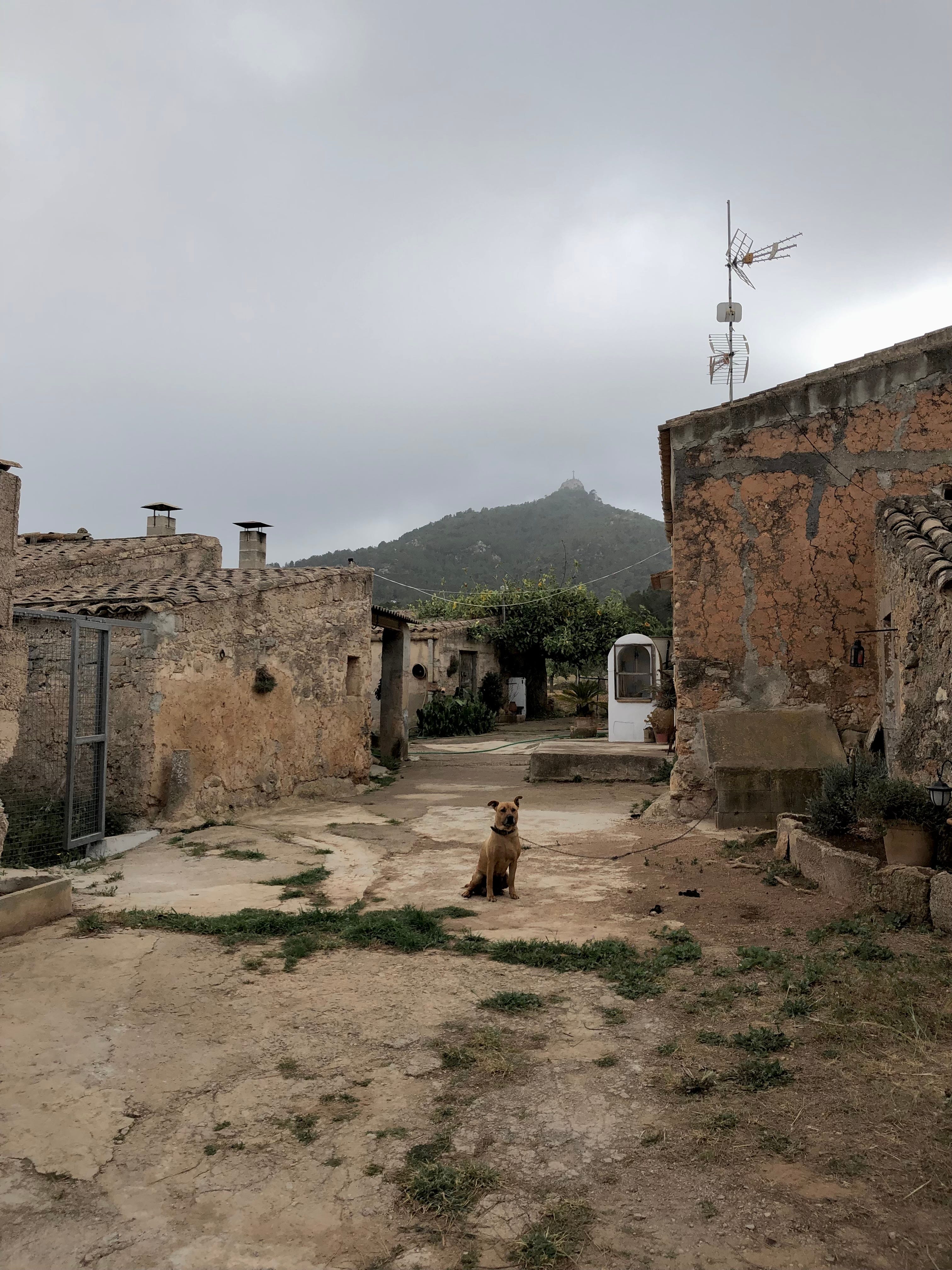
We were driving up to a place deep in the entrails of Majorca that looked like an illustration to a medieval legend – an old stone house gilded by the honey of the golden hour, lemon trees, cacti, rose vines splayed like arteries over the walls. A dog sitting lazily on the porch.
A boy came out to meet us, and he was beautiful. A tanned vampire living in a stone mansion, a three-hundred-year-old crucifix on the wall and underneath it at least three guitars.
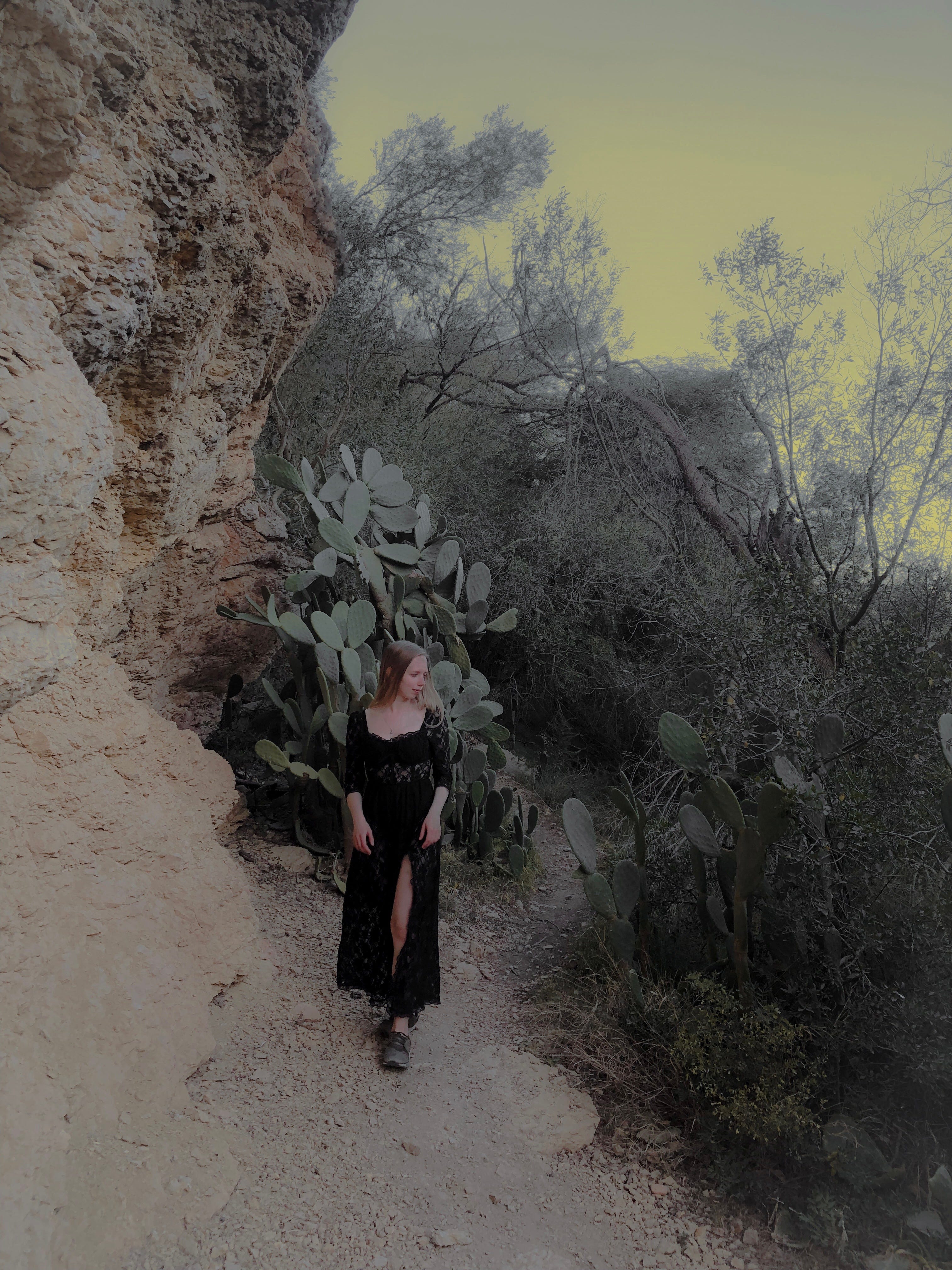
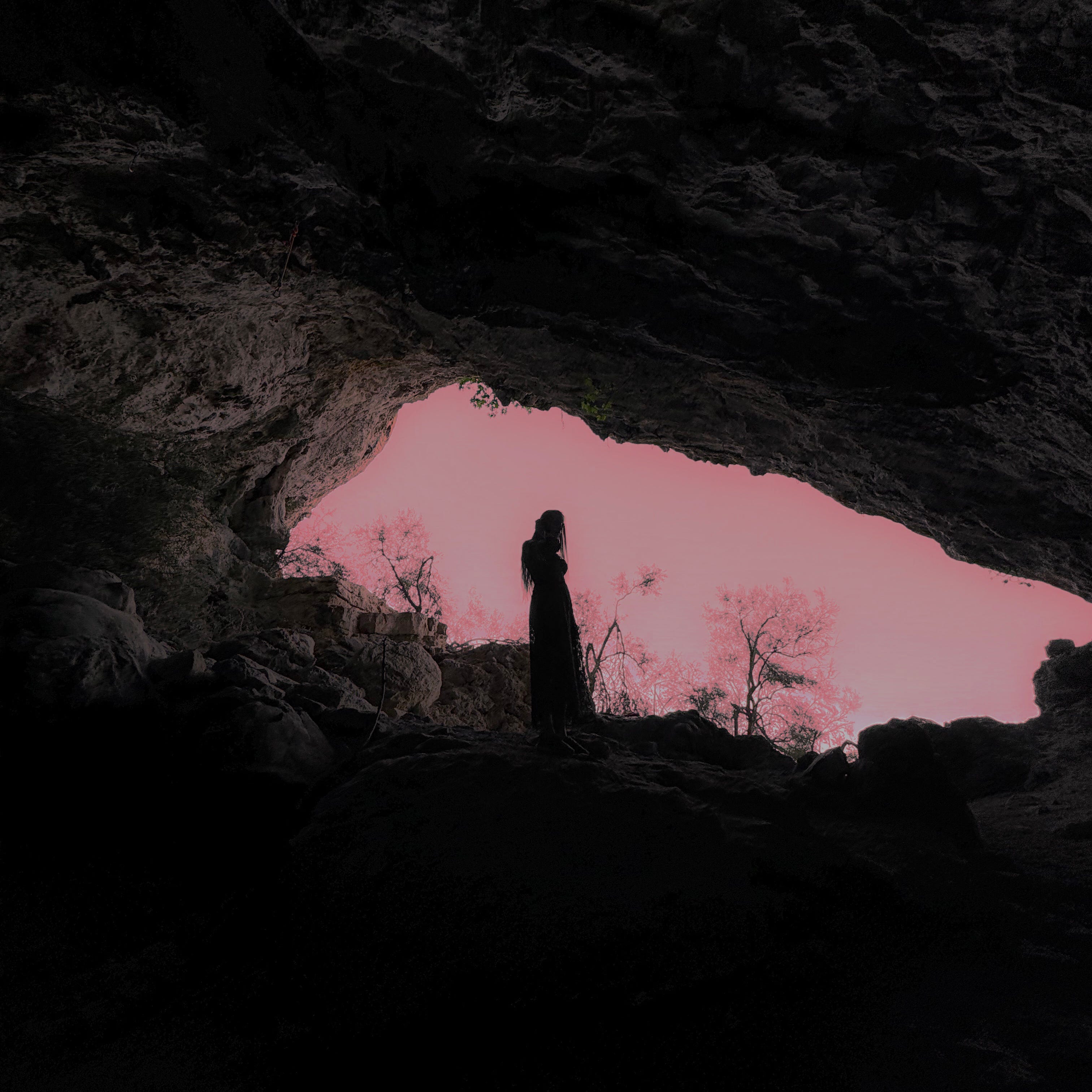
His name was Joan, he was Tai’s friend, a musician recording all sorts of ambient metal music here in this house. He took us to a castle nearby, vouching it had been built by the Romans themselves and was exactly-that-old. I didn’t care how old it was; it was beautiful, and the light was soft, and golden, and Joan told us there was a cave just under the castle, so we went climbing down. Cacti taller than me growing around like wild nettles, desert-red sand, first time I’d ever seen bats.
“I can sense a spark”, Tai said, half-jokingly, as we were walking back to the car.
I laughed and told her I’d have a spark with that tree over there, too, if it showed me some attention. I didn’t say it but my insides felt suddenly warm. He surely couldn’t like me but it was nice, to hear her suggest so.
When we made it back to his house, to the scenic thunderstorm of it, he showed us around his land and his orchards. My head spun and spun and floated, dizzy on the smell of orange blossom – and youth, and the blue hour, and God. And there were trees bearing fruit I’d never tasted, and it was tart and substantial, truth-like on my tongue. I watched him pick up the fruit and pass it over to me, to try more, and the half-moon was phosphorescent, and victorious, and forgiving in the sky over our heads.
We walked back to the house where he tried to talk me into playing the piano – I couldn’t. I told him I couldn’t but he wouldn’t listen, and I asked him to sing for me in return, and he near-blushed. I couldn’t see it past the tan of his skin but could still notice it in the way he looked down, and smiled timidly, and his eyes got all warm when he turned to look at me, another round of trying to talk the other into playing, something, some music – and being unable to. Knowing exactly, with every itch of shared awkwardness, what the other felt.
Tai was unimpressed. She said she was going to get sick of us and that we play, something, immediately, and one joke after another led us to finding the tab for the Russian national anthem out of all things, and we forced Tai to sing. Joan took his guitar and I tried to lean over the keyboard balanced unsteadily on my lap as we couldn’t find the stand to place it on.
It was ridiculous and it was real, and it was youth, in her messy amber light, in her glorious, childish embarrassment and mirth.
I wake up the next morning and feel like the lady of the house – an at-least-three-hundred-year-old stone house in the heart of a Spanish island, a medieval monastery on the opposite hill, cacti growing outside the kitchen windows, lemon and orange tree groves, stone stables and a lovely dog named Linda that somehow thinks she’s pregnant and is heavy with breast milk. She’s still a princess and has the kindest, saddest brown eyes, like her owner in whose t-shirt I woke up in the morning and walked out into the garden to get my reptile skin warmer in the sun. To smell the roses.
When we walked out to see Tai off at night, one in the morning, he told me to look up and I gasped at how bright the stars seemed – and couldn’t help remembering another boy showing me a very different set of constellations exactly a year ago, in the opposite heart valve of the planet.
We ended up staying awake through the night watching Tarkovsky films with Spanish subtitles, barely grasping on the plot as we felt the urge to tell our whole lives to each other, to drink on that recognition and camaraderie, the shared desolation of our worlds.
The dawn seeped in, we stepped outside and climbed onto the roof of the stone stables – of course, he has stables – me huddling his jacket closer to my frame. All the land around was his – the citrus tree groves, more trees I don’t know the name of. The sky sour pink, and soft gold, and there were too many sounds to count in what used to feel like the quietest place in the world – his chickens, the neighbour’s chickens, the local frogs, that one lonely car far in the distance, the white bird swooshing through the rose gold of the sky.
And when in the morning after the Tarkovsky marathon we both have barely slept two hours, when he climbs onto the sofa next to me, lies down and asks if he can hold my hand – I don’t scream. I watch him caress my fingers and speak, quietly, with his eyes shut, carefully choosing the English words, about how my hands are sweet, and pale, in no way like his, and when there’s a rough, breathy voice coming to say that the hands always stay cold no matter the weather outside, something to do with how my blood vessels work – I don’t recognise that voice as my own.
When there’s a heart pounding like a bird throwing itself frenetically over the corners of the cage, a burning meteorite coal against my sternum – I don’t recognise that heart for my own, either. I just close my eyes and pray for something to tell me if it’s the most beautiful thing I’ve ever lived through or the most agonising one. “Both”, a voice in my head replies helpfully, and I nearly nod but not quite. It’s always both. How come I’m still asking, how come I still haven’t learnt, anything, at all.
We sleep through the day, and in the evening Tai comes back – I wake up from the sound of her voice spreading over the house. We drive to the private beach Joan had told me about the night before, on the territory of an abandoned mansion – he knows the owners and they’d left him the keys.
We drive, red-golden hour, through miles and miles of land, peacocks walking around, emerald and azure upon the red soil. Then we have to leave the car and it takes at least half an hour to walk through the thorny bushes; my legs are cut, and cut, and cut over again, until they’re nothing but maroon scratches all over. It’s still intimidatingly beautiful, all of it, and I’m greedily trying to stuff it all away into my eyes, deep into the back of my skull; to grab as much as I can take with me.
The cacti, and the white flowers, and the red clay under our feet. it feels like we’re in a desert somewhere in Arizona. Tai’s skirt gets caught on the thorns every two minutes or so and I readily fall on my knees to untangle her, a routine that suddenly has great meaning. Everything here does.
When we finally make it to the beach, I gasp. It’s a little harbour with not a soul in sight but the wild goats galloping across the cliffs, dark against the blue prayer of the sky. It’s getting darker, and Tai takes out her flute – I’d never heard her play before – and I step into the water, too cold for Tai and Joan to join me.
I feel alive as the salt goes into each of the cuts on my legs, I feel alive as the cold water is closing in on my head, I feel alive as I lie on my back watching the frail crescent above, blue and nearly blinking at me. My ears are submerged into water but I can still hear the echoes of Tai playing the Lord of the Rings theme on the flute back on the shore – it’s like the sound is coming from under the sea, mermaids luring me in with their silver voices.
I was scared to go on, was scared to undress in front of Joan, was scared the shame towards my body, the revulsion towards my own torturous humanness, would break the spell, shatter the moment. It didn’t; water is a mother and a mother it was, and I remember that feeling, somewhere on the verge of words, but if it was a word, it was a relieved ‘hello’ uttered with my whole body, a home-coming, the solidifying, forgiving coolness.
There was peace, and I knew I had to leave it again in a few minutes, so I lay off swimming back to the shore for as long as I could before my feet started growing numb. It was all making sense in the water, trusting and being held, and I hated knowing how firm land would take all that meaning away.
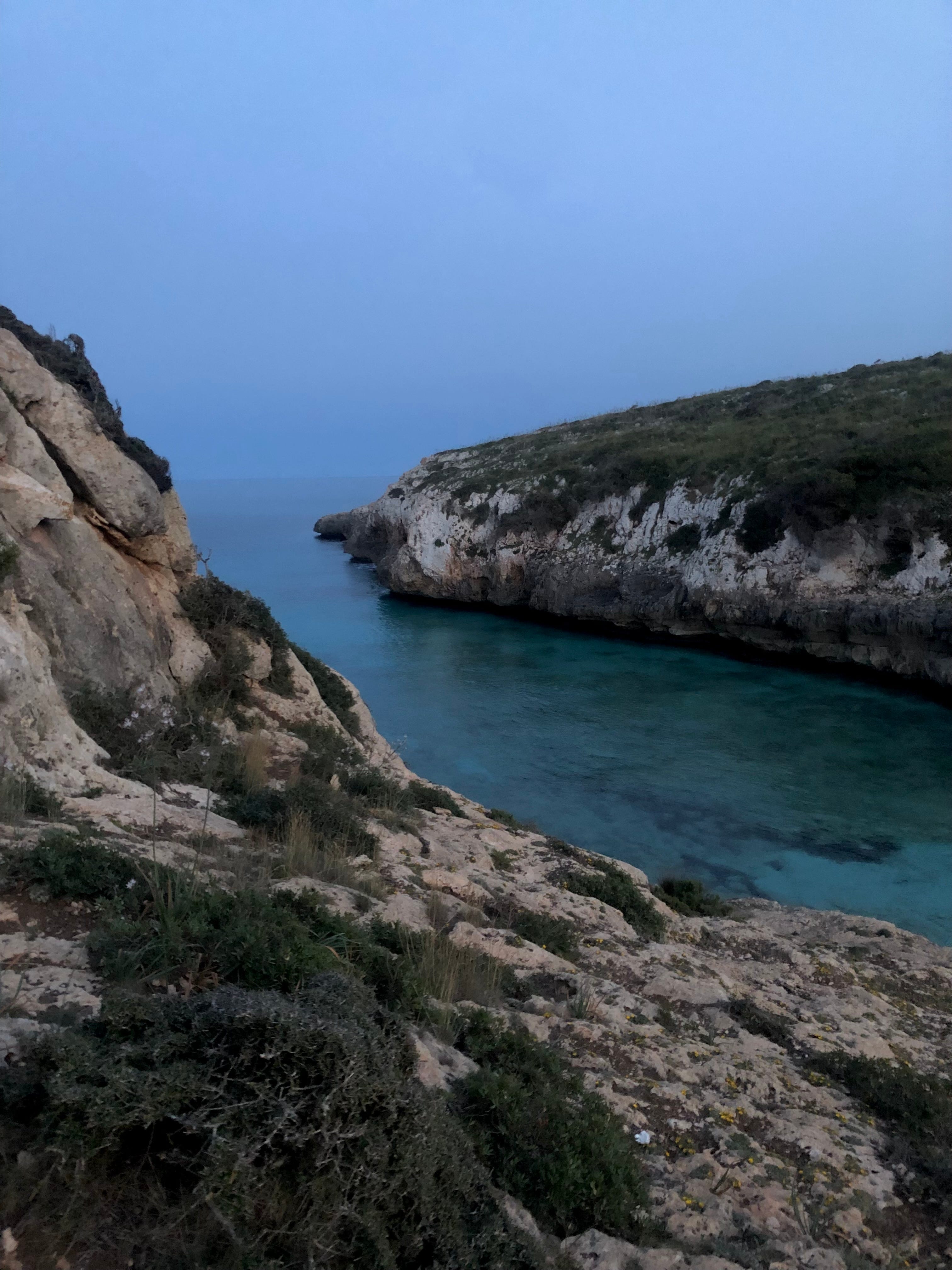
We leave the beach, back thorough the thorns, pitch black but for the flashlights in our hands – and I cut whichever parts of my legs hadn’t been cut before. We stop at the abandoned mansion and walk inside, and the only thing reminding no one lives there is the thick coat of dust over every surface. There are books on Spanish inquisition on the bookshelves, in Latin, at least eight tomes, and massive portraits of the previous owners.
Joan says, “The lady of the house used to live here with her girlfriend”. It’s not just an abandoned mansion in the middle of nowhere on a Spanish island, one we’d entered illegally, no – it’s a lesbian’s abandoned mansion. This was making it all the sweeter.
We suddenly heard a noise from downstairs, and Tai grabbed my hand in fear. We were rushing away, and I was giggling without making a sound, wordlessly, dizzy on adrenaline, and youth, and life. My skin still tasting like salt, my heart still making a leap around Saturn, at the very least.
We made it back to the house then, and when Tai left, I’d spent far too long with my skirt hiked up, tracing the outlines of the cuts on my legs with my fingers, staring in the mirror. Joan came in on that, and I turned to face him, and didn’t put the skirt down for another few seconds longer than needed, and he seemed alright with that. He seemed alright with any of my ridiculous flirting, or so I thought at the time.
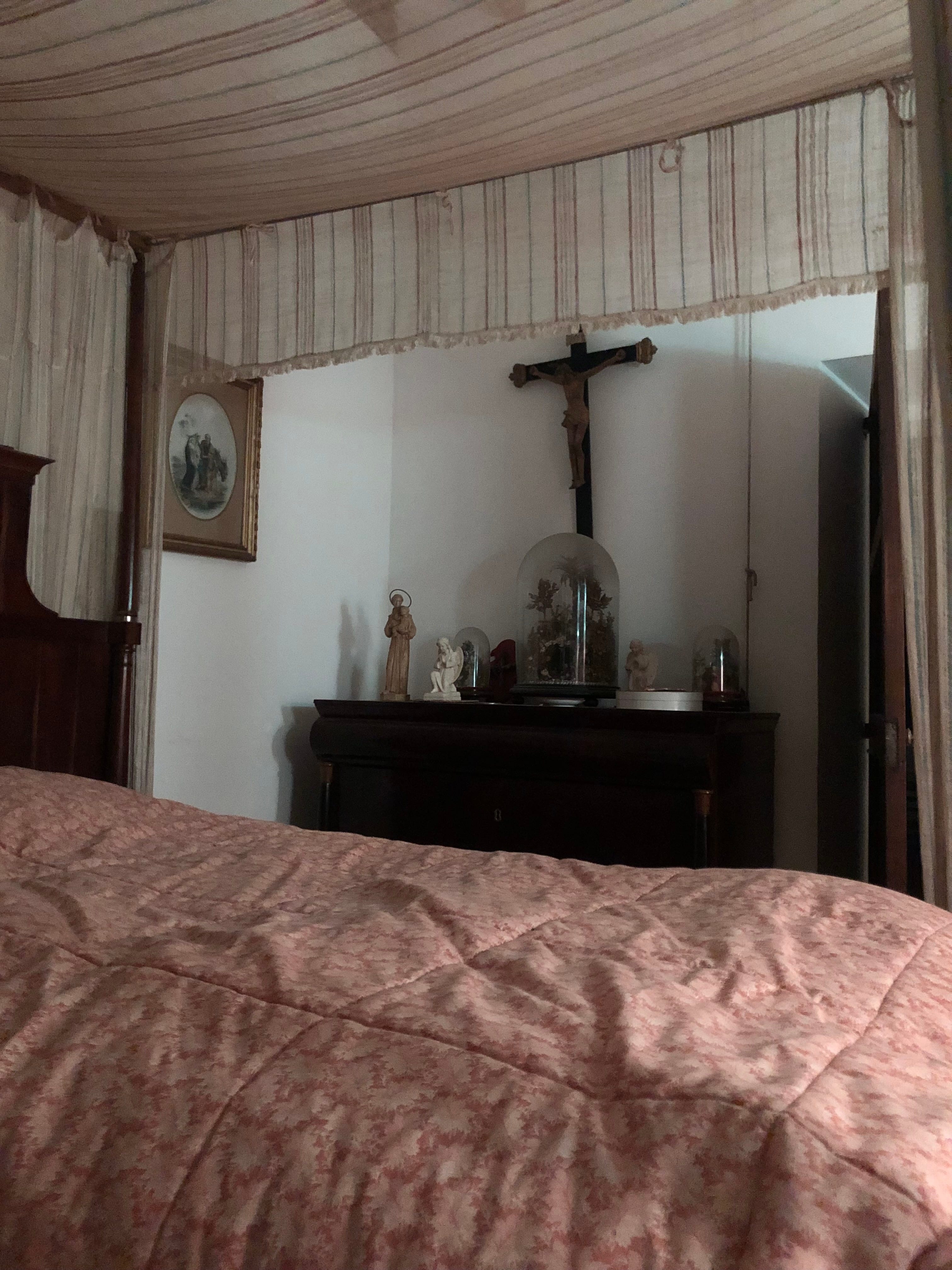
We go back to the sofa and he turns on another Tarkovsky film the plot of which I will never know. The film is somehow in Swedish, and it’s macabre how hilarious we find it, trying to guess what on earth is going on. Half an hour in he asks if he can put his head on my shoulder. I nod. He plunges in, buries his nose in my damp hair and says, quietly, “Now I finally know what shampoo you use”
Tai had brought back my backpack and I didn’t have to borrow his toiletries again tonight. My knees start shaking and I think, distantly, that I’m pretty sure I’ve heard something similar in one crappy American romcom or other.
I felt like I’d been kicked out of my body, and I was watching this boy, head on my chest, forcing myself to remember – everything. The way white-hot ripples spread round my body as if my blood had become a redwater sea each time he breathed out, his breath warm and tingling on my neck.
My arms and hands felt wooden; it was like I myself was a rare, timid bird, jittery and alert, and I was afraid to move to scare myself off. He kept moving, up and down my shoulder and chest, every five minutes or so.
I said, in a voice that didn’t sound like my own, that I was cold – he nearly hauled me over himself then, bringing both my legs closer to him. I knew I had to remember this, to remember everything, and yet all I kept thinking about was the word ‘frigid’, a white fly swirling in front of my eyes, sticking to my eyeball, blinding. I felt frigid.
Cold, unwilling, wooden. Frozen. I was scared to move so that he wouldn’t think for a second that I was enjoying that. The truth was, I had no idea if I was. I knew I’d have to decide on that very soon, knew he was expecting me to, yet I couldn’t beat out any coherency from either my body or my mind. They were torn apart from one another and had no idea what the other was doing.
It felt as if my brain had forgotten it had a body, and that body was left for a Spanish hermit boy to do with as he please. I didn’t know if I’d ever be able to regain control. I wasn’t scared and I wasn’t being forced upon, but I wasn’t there, either. I felt like a fish inside of a big glass aquarium – the bell jar, how come she found the most honest words to describe it, Sylvia, God – and I was watching myself with my round yellow fish-eye, curious, confused and so far away from myself I felt I’d never be able to reach me.
When I was eighteen, I wrote a poem, a silly one that for some reason still feels like the most important thing I’ve ever scrambled up for myself. The poem was a bright, blinding, life-altering realisation, as a teenager, that I could – and would – be falling in love with men and not only with women. That it was going to be a part of my life regardless of anything I thought I’d known of myself in those first eighteen years as a self-proclaimed lesbian. Suddenly it all just stopped counting.
The last line of that poem was, “God, he was suddenly younger than me”. It was the way the poem had started, with that one line that had been put into my head by someone, or something, and was swarming around annoyingly, pretending to have meaning. Up to this day I barely know what it was about and why it sounded so right, and so big, and so true.
The poem was written for a man much older than me and I thought it was a contrast, some kind of tenderness breathed into the line – he was so safe with me, and so trusting, that he looked even younger in his sleep than I was.
That’s what I thought it was about anyway.
And now there was this boy, truly younger than me – by a month and five days, of course I’d counted – with his head on my chest, looking as if he’d lost another decade. He looked like a child, skin smooth and brow not furrowed.
I thought how writing that poem I felt this was a big turn on, this level of vulnerability shown to you by a man, this transformed youthfulness that comes from the lack of worries – worries your presence had soothed. Now as the poem became a prophecy five years later, I couldn’t find that attractive anymore. I felt like a mother cradling a son on her chest, and that was the least arousing feeling I could think of. I felt like a pedophile and I felt sick.
Distorted, altered, away, I imagined myself staying here, a housewife, washing his clothes, and cooking him dinners, and scrubbing his kitchen floor – and wanted to throw up. I grew up in all that terrifying might of a land, thousands upon thousands miles of home that I’m yet to explore, the vast, unbearable world to plunge into and let it swoosh past me at an abominable speed. I wanted everything. I needed – everything.
How could I ever, ever at all, settle for a quiet life on a quiet island that was smaller than even the Moscow region where I grew up. I would start howling in a week’s time. Howling for my concerts, and my travels, and languages twirling around on my tongue, four countries a day. My perfect strangers and my unlikely friendships, my pilgrimages, my volcanoes and my seas.
I’ve never been to Australia, Antarctica or Arizona. Did I really believe I could live that down.
I was dreading the idea of finding a lover to slow me down, and here I was, nearly allowing that to happen. Years and years I’ve been talking, wistfully, about how I want nothing more than to settle down – and yet suddenly it seemed like cutting my own limbs off and feeding them to alligators and vultures alike.
I was too much for this boy. I was too much for myself. My restlessness would never let me stay, anywhere, I will always be kicked out from the womb – and away. Gulping on life, sinking my teeth into the flesh on her thigh, the earthy taste over my mouth. I wanted stories, and Joan seemed to be an open book after half a week’s time.
I felt guilt scratching at my throat, prickling on my fingertips. I wanted to like him – and suddenly every single thing in him repulsed me, or annoyed me, or enraged me. His neediness that I mistook for passion, his cowardice that I mistook for knowing what he wants.
Looking at him was like looking in the mirror and I didn’t want a second more of that.
I was suddenly shown what I would’ve been like as a man, and that was a frightening sight. What the world has been generously forgiving me and signing away as girlish eccentricity, in him looked like hysteria. The qualities I relished in women I’d been falling in love with – volatility, intensity, unhinged creativity and dreadful yearning – were somehow the last things I wanted to see in a male lover. I felt like a kindergarten teacher, a mother figure, an anointed saviour. I wanted to be none of these.
“I wanted to be an equal”, I begin to write and swallow a laugh – God, no. All I ever wanted was to feel small, and shielded, and overfed in someone else’s light.
There’s a persistent joke in the duality my life stands on, a giant turtle cradling the earth I walk, shakily. My bisexuality, bilingualism – where at nights I dream in two languages and can no longer distinguish which one is the one I was born into. Bipolarity at last. I feel like my one leg is always in another hemisphere, metaphorically, and my right hand rarely understands what the left is doing. I’m two different beings in mania and in depression, two different people speaking Russian and English. Two different people when in love with a man and a woman.
I talk of every man I’ve loved with the fragile, quiet sigh – of gratitude most of all. Of the, “No, you don’t get it, I know it didn’t work out, I know it hurt – but I can’t believe I was allowed to know him”. May God watch over him, may angels sit at the edge of his bed when he sleeps.
Talking about a woman I’ve loved, I cross myself, internally, a murmur, “I’m lucky to be alive”. Still with gratitude but with god-fearing reverence too, the way I talk about winter – admiration, unease and full surrender.
It’s wild to me how this works, all my life, the pattern my parents set unwillingly and unknowingly when I was a child – women tear me apart and men sew me whole, do the kind, silent work of undoing the damage. A chapel built over my family’s scorched ground, I’m still seeking out the most emotionally volatile, mercurial, vortex-like women, like my mother – and the most reliable men, like my father. Those I’d go to war with if needed.
It never works the other way round. I’ll see a steady, grounded woman, one who is even one bit more solid than water – or a man who’s bursting at his seams – and I won’t want them. I’ve tried to learn to, artificially, and it never tricked my mind. It only knows one pattern, however flawed, and follows it blindly and rigorously, year after year, calamity after calamity.
I’m staring into the mess I was born to, in surrender and in defeat, starting to see that to fully be myself, to connect with myself, I need both, of everything. Have to take in both to feel alive. It’s terrifying and liberating, realising this. Learning to accept it.
Joan was on the side that I knew I couldn’t teach myself to desire.
He said then, quietly, and I was dreading it, “This sofa is uncomfortable, would be easier if we just went to sleep together”. I said, “I’m not sure”. He offered again. I said, “Alright”, because I had to say something and still had no idea what it was that I wanted. I was properly shaking from the cold now, and it was nearly beating me back into my body but not quite.
He said, “Your bed or mine?”, and I suddenly grew very tired, as if another couple of decades had been thrown over my frame, annual rings, and I a tree, a shabby old pine, a pale birch, a thorny raspberry bush. I wanted to sleep, and to be over with. I asked, feigning interest, feigning presence, “Which one is more comfortable?”. “Mine”, he said, “the mattress is not as.. how do they say it in English? Hard?”
I nodded. He said he’d go brush his teeth. I went over to my room and picked up a razor, not knowing whether I wanted to shave my legs or slit my wrists or both – and nicer underwear.
He left the bathroom and I slid in instead, staring at my distorted face in the mirror, trying to see a glimpse of recognition, pinching my skin rough.
Here I was finally being presented with the opportunity to know what it was like, being desired, being wanted, being one with another, on a physical, vital, primordial level – and I couldn’t lure myself back into my body no matter what I tried. I knew I’d go back into that room and suffer through feeling, every second, how I wasn’t there. There would be shrieking in my head nothing could tone down, as there always is.
So I walked out, and hunched to his room, and stopped on the threshold. He was there, sat on the corner of the bed, suddenly so small, and childlike, and lost, his room like a teenage boy’s bedroom, dark-green walls and posters and nerdiness – and there was no way on Earth I wouldn’t have felt perverted, lying down in that bed at all. It tore at my heart, in hurt and in tenderness, in compassion, in exhaustion, and I said, “I think it’s better if I go to sleep, in my bed”
He looked up at me, a hunted animal, prey, eyes both hopeful and defeated and tired, all at once, and I knew that look, I’d seen it in the mirror, I’d felt it on the inside of my sternum. That’s how I look at people I want. He nodded, not saying a thing, and I was so bloody cold it was nearly the only thing I could think of.
I walked off and into my room, got under the duvet and felt colder than I ever was, here, in Spain, after months of a Russian winter gulped on so recently – still, this was different and unbearable.
I vaguely registered an odd sound, my teeth chattering, horse-like, upper jaw against the lower one, and it’s only then that it got to me that I couldn’t have been that cold. That it was something of a panic attack, and my body’s way of taking this in, and trying to settle itself down, releasing the excessive pressure the only way it could find. I wanted to laugh, bitterly, maniacally – God, so miserable, pathetic, a permanent virgin, a spinster, a nun – clutched by panic at a chance of being fucked. Has there ever been a more pitiful, more human, sight.
I woke up still shaking, and undone, and not knowing how the rest of the week would go on – would there be awkward silences, or attempts to finish whatever last night had started, or, God forbid, conversations about our feelings.
In my family we don’t talk about feelings; we drink them down, or wash them away, or make a splendid joke over the fishbones of our hearts. And I’m fine with that, really. I definitely can’t change that over a whim. I had a hunch, though, that Joan was even worse at discussing feelings, and even more reluctant to, and that was the only thing that kept my mind afloat.
Tai came, and I was still all over the place, all over myself, and she noticed straight away. I picked up Joan’s guitar and played the chorus of Hozier’s Too Sweet for ten minutes in a row until it was time for us to go to a cave nearby. All through the drive and inside the cave Tai was trying to get me to spill the tea – and I felt numb, and was laughing away awkwardly. There was a concert, an orchestra in little boats, pearls floating across the silence of a lake, in the deepest part of the cave. It was beautiful, I think. I wish I’d remembered it.
In the cave I’d asked Tai if she had that tranquiliser with her, the one I myself had been prescribed a few years back and stopped taking because killing myself seemed a better option than not having a libido, a clarity of mind and a sharpness of the world around me. Now I needed the pill. Tai warned me I might get sleepy – I brushed it off, said I used to take five of those a day on my worst weeks and still lay awake throughout the nights.
I did, almost immediately, start feeling off. Not quite sleepy but as if there was cotton wool wrapped around my skull and I was trying to look, and breathe, and talk through that layer of whiteness, dullness and softness. I grabbed a red bull at the local supermarket to try and get myself capable for the four classes I had to teach just then, and the mix of taurin and the tranquilisers had fried up my psyche entirely. I hadn’t done anything of the kind in half a year and now was just floating around in my own brain reactions, somewhat drugged but managing to live through those classes without giving myself away.
After one of those I left the room and as Tai had been in the bathroom, Joan called me, quietly, fully defeated. It was the first time we were alone since the night before. He said, looking nervously around, ready to be startled into silence the moment Tai came back to the room, “I feel so bad about last night, I’m sorry. It was so..”, he winced as if in pain, struggling to find the right English word, “inappropriate”
I felt sorry for him. I leaned in, feeling even more of a mother than before, hating myself for not knowing how to deal with these things in a way that wouldn’t have been so dreadfully patronising, “It’s alright. You don’t have to be sorry. But I’m sorry, too”
I felt like a character of the cheapest 90’s soap opera ever filmed, the tape possibly burnt straight after as it was pathetic even in comparison to the other fruit of the genre. I’d only seen these awkward, hot-shame pitiful conversations about the night before in films. In bad ones, to that.
He nodded and looked at me, cornered, a sad, apologetic smile in the corners of his mouth, not reaching his eyes; a sun-tanned harlequin. Poor kid. There was no doubt now he was nothing more than a child in my eyes, here, in daylight. I knew I did everything right, for the both of us, and it would never have worked, but it only made me curse myself all the harder.
All my life I’ve been the one being told no to, not the one saying no myself – it was an agonising role to suddenly step into. I knew far too well what it was like, being dismissed – with all my gifts, and stupid kicks of my heart, and my baggage. I knew that it hurt even more, being dismissed with kindness, and understanding, and something resembling sickening grace – and it was exactly what I was doing here.
I went back to the room and pushed through another couple of lessons until I walked out, empty, and sat down on the sofa next to Joan. I wasn’t going to avoid him for the four days I still had left in Majorca – days I had to spend in his house as I had nowhere else to go – and I wasn’t going to make it all weird, no-thank-you. I still loved his mind, and his creative spirit, and could choke on our shared awkwardness and fidgety defeat for as long as was needed.
I spoke unbearably fast even for my own ear, sped up by the breakdown and the first shot of taurin up my bloodstream in half a year’s time. I kept apologising; it seemed nearly like torment, like punishment, speaking so fast to somebody who could barely understand me as it was – but I couldn’t slow down, either.
I marvelled, distantly, at how I never thought I’d have the grasp of English enough to be able to speak it, tenses, phonetics and all, at the same speed my frenetic brain works in, when manic, when uncatchable. When alive.
Joan tried to reassure me and say it was alright, and he got most of it anyway. I was uncontrollable and possibly quite charming – I was throwing up bits and bits of all the questionable wisdom I’d collected in years of tramping around. Told him stories, one after the other, of ache and rebellion and hope, and by the end of it he seemed nearly as entranced and spent as I myself was. After one of the stories he looked at me and said, “Your life is like a poem”
I smiled bitterly, understanding, knowing – he didn’t get it either. No life is a poem. The eyes with which you look upon it are. I’ve met dozens of people whose lives took my breath away, and they only shrugged that off, skeptical, disbelieving. I wanted to shake them by the shoulders, to scream into their faces, one question alone, “Are you blind?”
That might be the question I’ve most wanted to ask people around.
Do you really not see? Do you not notice? How it flows, and repeats itself, and how everything makes sense in the end, especially the most senseless of things. How everyone you meet is a shard of yourself you most need to look into right now; how everyone is a lesson. A vessel. A carrier. How there’s nothing to perceive without the perceiver himself, the brave little body throwing itself trustfully, dutifully into the sandstorm, watching it transform into flower rain over his head.
I wanted to laugh, “You are a poem, not my life. God, don’t you see, I will make a poem out of you, I already am, and you’d be amazed at how I see you, at how I see it all, and you won’t see it as a blessing then, no, and I’ll be crushed by it, as I always am, and I’ll turn you into a story, just wait and see”
The thing was, I had already started turning him into a story, and it was becoming uncomfortable, being around him all the time, an itching reminder that he was still a living, hot-blood human being and not just another metaphor, another myth I’d wrap around myself and wear as armour, as dragonfly wings. I knew it was petty and disrespectful but I nearly wanted him out of my life so I could write about him, could decipher what this was given to me for, what it was supposed to teach me.
I felt like a puppeteer, one disposing of unwanted props, and I wanted desperately to be something else. I wanted to remember the human behind him not the story he’d become a character in – but it always eventually falls down into the tale itself.
I get a much bigger kick out of mythologising my own life than out of living it. It’s something I’ve known for a while now, something I’m ashamed of, but it’s there, and there are people I never want to write about so that they can remain flesh and blood to me rather than a fable to pass along. I try to keep ones closest to me out of any writing, and if this isn’t the most honest form of respect I can muster, I don’t know what else is.
Joan showed me a diary of his, the one he was keeping while in the Pyrenees with his recluse friend. I couldn’t read it, of course, so he just flipped through the pages – one of them was solely covered in blood. “Oh, here’s my blood page”, he said half-jokingly, suddenly small, and shy, and still making fun out of his own suffering as the best of us tend to do.
As someone who’d been keeping flasks of her own blood at home as a teenager, cutting and cutting and cutting and collecting, flasks full of liquid life, reminders of my physical presence in this world – as someone who could see herself smearing a journal page with blood alone, easily, I couldn’t not find it so pitiful, so beautifully pathetic, that it chewed at my insides in tenderness. I could see that I could never, would never, see him as a man I wanted, right here, in this page of dried blood that he was trusting me with: a stranger, a foreigner, a Russian weirdo planted in his house because there was no other choice.
I couldn’t even judge myself for feeling this way though I had every right, every need to. How come I was allowed that and he wasn’t. But he was, he was – this was just making him too much like me, too turbulent, and insecure, and fucking him would’ve been like fucking a brother, a much, much younger one. I hadn’t been keeping blood flasks since I was fifteen. He was fifteen in my eyes then, too, and it all suddenly made sense.
I was grateful to him, and loathed him in the same comforting way I loathe myself, for weakness, for humanness, for the world being too straightforward of an arrow not to get stuck in our guts.
I wanted someone to seem strong and resilient and reliable. The blood-letting and inability to take in the world I had enough of as it is.
We were now talking about travelling, I was sharing one story or another from my tramping past when he said, “You’re nearly like Alexander Supertramp”, as a joke.
See, there aren’t that many things that I could say have made me, but the film Into the Wild and the story of Christopher McCandless – who called himself Alexander Supertramp – did. A young man from a rich Californian family who upon his graduation from a posh university cut his credit cards in half and left home, to wander, to tramp, to seek meaning. He died later, alone, in an abandoned van he’d found in the deep forests of Alaska, after being unable to cross a rough river to make it back to civillisation.
In the circle I was in as a teenager he was a hero. An Elvis. A fucking Jesus Christ. To see this Spanish kid know who he was and use his name so freely was like a stab in my guts. There’s something in it, in these boys being into those particular nerdy things I never talk about that are what my entire carcass is built upon, and clawed out of.
I said earnestly, smiling in disbelief, “God, it’s so good that you know who he was”, and Joan stood up, walked to his bookcase and picked up Christopher McCandless’s biography, in Spanish.
Joan was becoming more and more the long-lost teenager brother I never had. I couldn’t believe I could ever want him, and neither could I believe we hadn’t known each other long before we were born.
I enjoyed Joan’s company but prayed daily that he’d come back from work later. There was nothing I wanted more than being alone – ever since I was a kid, stuck with three other people in the same room, my biggest, purest, cleanest dream at the time – to have a door. The one I could close, and no one would enter. I still, up to this day, think it’s the most beautiful thing imaginable, that door that opens and closes at your whim alone.
I dreaded him coming back, dreaded the awkwardness, the role I had to succumb back into, the one I couldn’t even name anymore – I was no longer a seductress, and I would step over my own dead body if he’d tried to shape me into a mother figure again. I was too tired to be a friend and too grateful to him to pretend to be a stranger, temporarily dwelling in one of his house’s heart valves.
But that’s who I was, really. All I was.
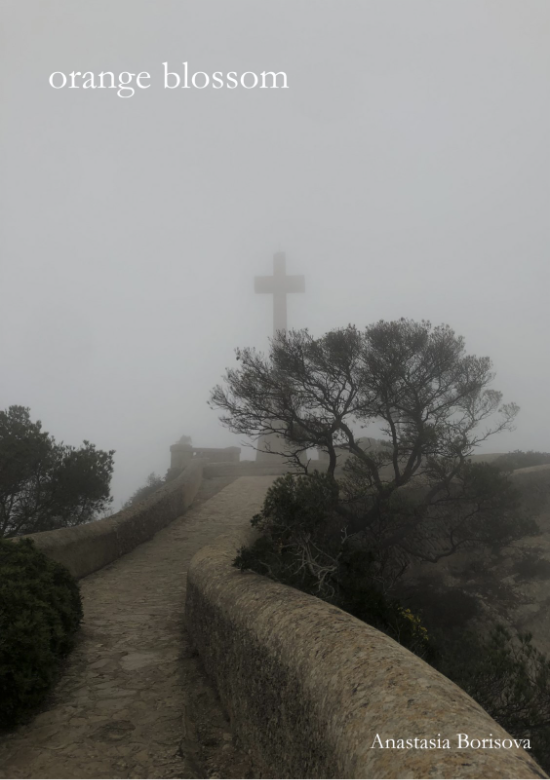
When Joan did come back home one afternoon, we drove up to an abandoned monastery on top of the hill, the one that could be seen from the kitchen window. There was fog breathing all around, all over the greens and the tame-yellows of the sand, and the near-red clay. I wondered if I’d ever seen anything more beautiful. I must’ve, clearly, but at the time I couldn’t remember.
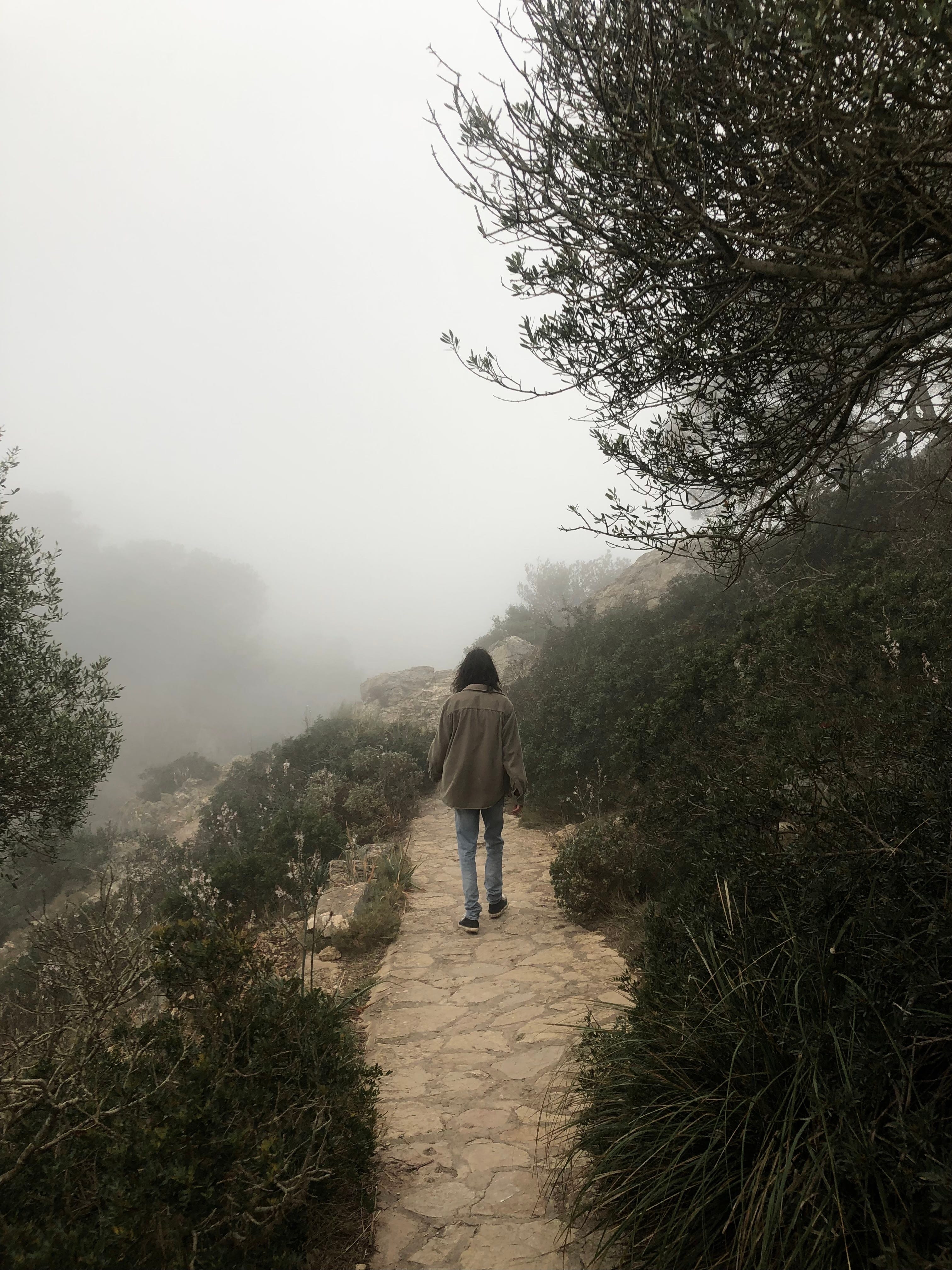
Turn, after turn, after turn, and we were hiking up the trail to a massive statue, a looming monument of some kind, the world behind the imposing figure blurred out, drunk out, made bearable by the fog.
There was no one in sight but us and the fog, and I kept looming over the fence on top of the cliff, hypnotised by how the fog made it look as if the ground would never come, that if you fall, you would soar, forever, and God knows whether it would’ve been a relief or a punishment, or both. Joan said it was likely this wasn’t even a fog but a cloud. It felt like a metaphor predictable enough, us finding ourselves, physically, with our heads in the clouds. As if we needed any more of that.
Joan stood next to me as I was staring into the abyss, and I begged myself not to wonder what he was thinking about. Was it awkward, did he still feel attracted to me, even now, did he think this was some kind of a heterosexual weekend getaway, you take the strange goth girl that’s been locked up in your house, drive her up the hills and watch her gasp in awe at the fog. I wanted, desperately, for it not to be that. I wanted it to be a big, grand, beautiful, luminous – sexless – moment that it was for me.
I wanted to feel God’s love, and forgiveness, and the lack of burden of someone else’s affections on my shoulders. For someone who’s spent all her life thinking, desperately, that the only thing I ever wanted was to be desired, I was getting tired of that hellishly fast. A part of me was scared he’d try to, I don’t know, kiss me, or talk to me, or anything – and another part of me yearned for that, for the sake of the drama alone.
But no, he didn’t, and it was just the island green kissed by the fog, and the pale sand, and the colours suddenly having a taste, a sound and a pulse.
At minutes like these I think of my mother’s aunt, someone I’d spent years being jealous of, unable to forgive my mother for loving her more than she loved me. She was maybe the only true wanderer in our family, the sole untamed and doomed Aquarius before my mother and I came into play.
I remember a story from a few years before she died, this aunt, Aunt Tamara – how unbearably tender her memories of her youth were, and how she kept talking about wanting to find that Korean man, her second husband, back on Sakhalin, an island in the Far East of Russia. It’s so close to Japan that, I’m told, when you get to the edge of the island, your SIM carrier automatically changes to a Japanese one, something to do with their cell towers giving out a clearer signal than ours do.
Aunt Tamara went to Sakhalin with her daughter after her first husband had gone to jail for drunk-murdering somebody, was released and began stalking her, not wanting to accept the reality of a divorce.
The men in our family have been notoriously mellow so no one could, or tried to, protect her. She was scared, for herself, for her daughter; this man was capable of murder and still believed his ex-wife and child belonged to him. And then Aunt Tamara began what my mother and I continued decades later – running away as far as she could, from the life back home, from the helplessness, hopelessness and dread.
Unlike my mother, she couldn’t get a ridiculous job offer at some warehouse in China, or claw out a New Zealand visa like I did – but she went as far as she could, still, to the part of the Soviet Union furthest from home. To Sakhalin.
She was a seamstress there and married a Korean man, and, as she kept saying closer to the end of her life, that was the happiest time she’d been given. Between burying one daughter and then the next, her parents, and siblings, and hopes, and dreams; before one of her breasts got cut off as cancer started eating her alive – she got her Sakhalin, the hills and the seas, the deep, untamed, glorious wild. The retreat.
And when in her seventies she started talking about finding him, the Korean man, her second ex-husband, nostalgia smoothing the lines on her face, touching it with a nearly ethereal, sunlit glow – it tore at my heart every time. The glow wouldn’t stay there long, as she’d sigh and say, “I’m not even sure he’s alive”.
We weren’t sure, either. He was older than her and God only knows if he stayed on Sakhalin after the Soviet Union fell apart, or went back to Korea, or maybe to Japan, or elsewhere. The only thing we knew was his name, and we tried all feasible social media and search engines, but, realistically, the guy, if alive, would’ve been deep into his eighties and unlikely to use the Internet at all.
We didn’t find him, of course. But that glow, the glow in Aunt Tamara’s face I will remember ‘til the day I die.
I wonder if, God forbid, I ever make it to my own seventies – will I be telling the youth about that Spanish boy who played the guitar for me, and showed me around private beaches and abandoned monasteries of his island, and told me in a small voice how he’d never felt so close to anyone who didn’t speak his language. And I, too, would sigh and say, “Those were the happiest days of my life”.
For Aunt Tamara it was an island, and for me, too, it’s always, always an island – from falling in love in Britain, to Ireland, to New Zealand. To Majorca.
I keep noticing these parallels, these black pearls scattered over the thick ink of our lives, of my family’s suffering, of the scenarios passed from one woman to the next, generation to generation, for the next young girl to think that she, surely, would break the cycle, brush off the spell – only to find herself shaking her head in disbelief, smiling in front of her laptop screen, a flood of recollections of how every single thing in her life is taking her over the same path the ones before her took, with just as little success.
All I know is I wouldn’t be given the same tender-clawing, butchering romance of an ending, searching for my long lost love, only wanting him back because I cannot find him. No, in the age of social media it’d take me no more than two clicks, to find a profile picture of a grey-haired Joan, probably with some fake blonde woman for a wife, and kids, and the mansion to pass on to the new life. I can nearly imagine him cringing at the picture I’m describing, wincing at it as if in pain, yet I wouldn’t put it past him, to settle down, finally, to find whatever it is he needs.
I think now that Sakhalin could be a metaphor of a kind to me, still, and that each of us carries a Sakhalin of our own – it’s just for some of us, the restless bodies, my mother, Aunt Tamara, me, thousands upon thousands of others – the island becomes real, physical, tangible, land over water, fog over hills. We need to drag our bones as far away from home or it doesn’t count.
We were still young, Joan and I, and nearly not dying, back on the sofa in his living room, watching yet another film. Trying to at least, not being able to hold on to any plot line or any chunk of dialogue, too preoccupied with whatever it was we were trying to live down.
He asked me if I wanted to hug. I raised an eyebrow, as well as I could, and asked, “Are you sure?”, which was, I now realise, insensitive and condescending, with no such intention behind it. All I wanted was, really, to know if he was sure. I knew I still wasn’t. He waved his hand dismissively, looking even more the lost child I had grown to see in him.
I said, “No, it’s alright, I do want to”, and clung to his side awkwardly. He was still warm, still a southerner, and my cheek was on his chest. I could feel his heart beat so rigorously fast it was nearly kicking me in the teeth, a trapped bird wing.
I said, my cheek still on his chest, “Your heart’s beating really fast”. He blushed, blurted out an apology. I found it beautiful and couldn’t see why he should apologise, not for this, no. This was human, and I was dreading acknowledging that I could make somebody’s – anybody’s – heart beat this fast, this dangerously.
I don’t think it was me, really, that any of us do that to one another. Just the hormones, the chemical reactions, our bodies doing it all by themselves. I at times wonder if these bodies need us at all.
Tai came, and we had dinner by the fire lit in the kitchen chimney and then moved back to that blasted sofa that held far too many memories by now. Tai and Joan fell into a conversation, in Spanish, and I fell into what seemed like a trance.
The rhythm of their voices, the not-nearly-enough grasped words, monotonous, the ones that could become just a wall of sound if I hadn’t put in the effort to pay attention – it was like the sound of rain hitting the windowsill, or the evening traffic heard from my third floor window, a shamanic background of a kind.
I wanted desperately to be anywhere else, and it was petty, not being able to wait out even those couple of hours before a steel beast would take me away from the island, spit my bones out somewhere in Italy, under looming wisteria vines and a looming God.
Still, I wanted out, away – so I took out my phone and began typing, fervently, Tai and Joan’s voices still a monotonous, profound buzz, an inner, darker, deeper rhythm. I was writing poetry and prose, journalling, ragged breaths of words, phrases with no purpose other than to transport the only me that I know away from my body. From being a foreigner and an intruder. From the language I was tired of trying to understand. From the lack of autonomy and the lack of choice.
Hours passed like that, hours I barely noticed – only later I did see how much time had passed that way, finding scribbled poems and dramatic journal entries in my notes app, seeing the time stamps marking each of them. I saw Joan start typing something into his own phone at some point, too, with the same simultaneously concentrated and absent shadow on his face. I knew he was doing exactly what I was, trying and failing to make sense of it all.
I kept thinking of the journal page stained with blood that he’d shown me. Thought of how pitiful it made him look in my eyes, and also, ultimately, how much tenderness towards him it brought me. How not once afterwards I could look at him and see a man and not a scared child, and how the last thing the universe wanted, our sweet mother, breathing soft sea-foam into our ears, erupting as torrential, everlasting life over our heads – was two scared children trying to fuck the fear out of each other. She has an abundance of that already. And I knew it, and could see that, clearly, and it still hurt, being unable to look away. Unable to succumb, to surrender.
I thought, absent-mindedly, how opening up an artery and smearing blood over paper, page, after page, after page, would’ve been far more honest a labour than trying to pour that blood into words instead. That gashing would into a lean, disappointing row of black on white, then the next, then the next, until you’re mercifully drained out – and it’s nearly the orgasm you’ve denied yourself and this boy next to you; nearly the same crushing release.
Joan hugged me goodbye, even more awkwardly now under Tai’s gaze, and went to sleep; Tai and I were to wake up in a few hours to drive to the airport. In the night I’d printed out a polaroid picture of the fog-absorbed statue towering over the hills, the one we’d driven to a few days ago, a substitute for whatever it was I was taking away from here, eagerly.
It is never love, you know. It is never the thing. But the blasted cinematography of it, the inconceivable humanness – they still make all the difference. I’m new and changed and cursed and hollowed out each time, and God bless, and so be it, and please please please –
It feels more and more often as if all of my travelling is only my heart’s business trips by now.
I take these two weeks, or two days, or two months, and without trying they’re filled with so much feeling, excruciating in its might, that I come back home and only pray to have the tools to untangle all that, to do these stories justice. I unload it all, shiny pebbles scattered around, gems and wet riverstones alike, and have enough to work with for months ahead, enough to write about, and sing of, and think over. Until I have run out – and go board the next plane. It’s petty, and cynical, and human, and true. It’s good to finally understand that.
I was ready to board the next plane now.
I was ready to go.
moonburnt (written at 18 in 2019)
⠀
and maybe one night I could watch him sleep —
peaceful, rivers inhabiting his breathing rhythms
immortal
angels of all different lands, and voices, and breeds
sighing onto the bones in his cheeks
taking him to where he cannot be anyone else's
not mine, not his mother's, not hers
merely his own god's
⠀
quiet, leaning over the nest of his hair
smell of november, and freshly cut heather,
and those sour black island berries
I can never remember the name of;
ever breaking my mouth, sticky and crimson
churning each kiss into fragile prison
neither of us ever tried to escape
count fish-birthmarks spilled over his back
as if imaginary beads of rosary —
the world has ended but we were worth it;
a prayer for him, more intimate than making love in itself
more intimate than the prayer for death
that lived in me longer
than the earth could be conscious, and bear us, and stand
but instead
somehow here I am
too alive at the end of his bed
the root-shaped veins on his eyelids, the colour of grief
of apostle weeping over post-apocalypse scene —
the ultimate sunlit kill
and maybe for once while he sleeps
we could learn to forget the time and forgive the life
and trust our weary sins
and hold our weary spines
and he wouldn't be so childishly jealous,
so helplessly self-crucified
with his unfortunate fellowman trying to warm my flesh
when he couldn't himself
as if I weren't already the warmest blood flow alive
and dead
with each white-breath seedling he'd plant
in the soil feeding the roots of my resin-heart
each time he looked at me that way
as if I were some kind of a holy grail
not a broken, dry willow tree branch
that scratched his ankles to blood
as if I were a sign of love of his god
not a cancer He'd coughed on the earth to torment his kind
as if I could somehow be loved?
and one night
one night, I swear, I could almost feel
pressing his fevered head to my moonburnt skin
home-coming, whole-coming
exhaling one unspeakable shared peace
god, he was suddenly younger than me